"Home")



 "Video: support to democratization in Sudan")
 "Video evaluation of the Civil Society Support Programme in Tunisia")
According to the African Development Bank, the middle class represents 22,0% of the population of the country (34.5 million people).
Our study focuses on the upper part of the floating middle class and the lower middle class, i.e. a total of 12.6% of the population (19 million people). This two groups share many similarities : they are both emergent groups that still have to struggle to avoid falling back into poverty ; they seem to have the same objectives and preoccupations concerning their children’s education and have quite similar eating habits.
Socio-anthropological analysis
The main objective of the study is to investigate, on the one hand, how rising middle class groups develop new dietary practices and perceptions about food products, and on the other hand, to analyze who has the authority to make purchasing decisions and what practices and perceptions are being passed from one generation to another.
To this end, we focused on six questions :
- Does the frantic pace of Lagos life style affect the dietary practices of the middle class?
- Is there a gap between self-identity perception and how they project it?
- What are the strategies and coping mechanisms used and what are the signs of social mobility?
- Have the educational strategies and learning processes changed between generations?
- What are the main sources of influence?
- Which visible changes affect the relationship between parents and children?
Methodology
We have done :
- Twenty semi-structured interviews with the recently installed middle class
- The ludic interaction with nineteen children
- Two focus groups (one with five women from the recently installed middle class and another with five people from the floating middle class)
- Participant observation was conducted in open-air markets, supermarkets, fast food restaurants, open-air night restaurants, local restaurants and places of worship (churches)
- Visit of three schools and twenty-one places of purchase (markets, hypermarkets, supermarkets and small local groceries shops)
The photography project
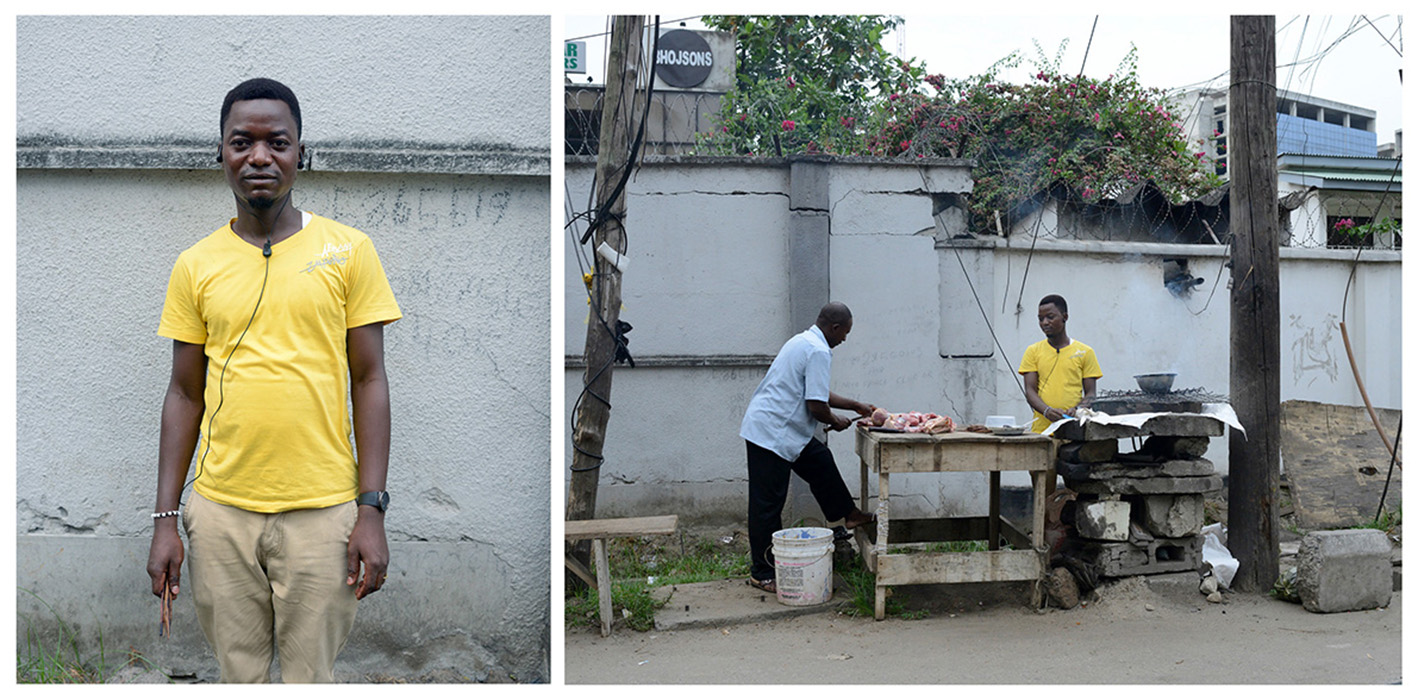
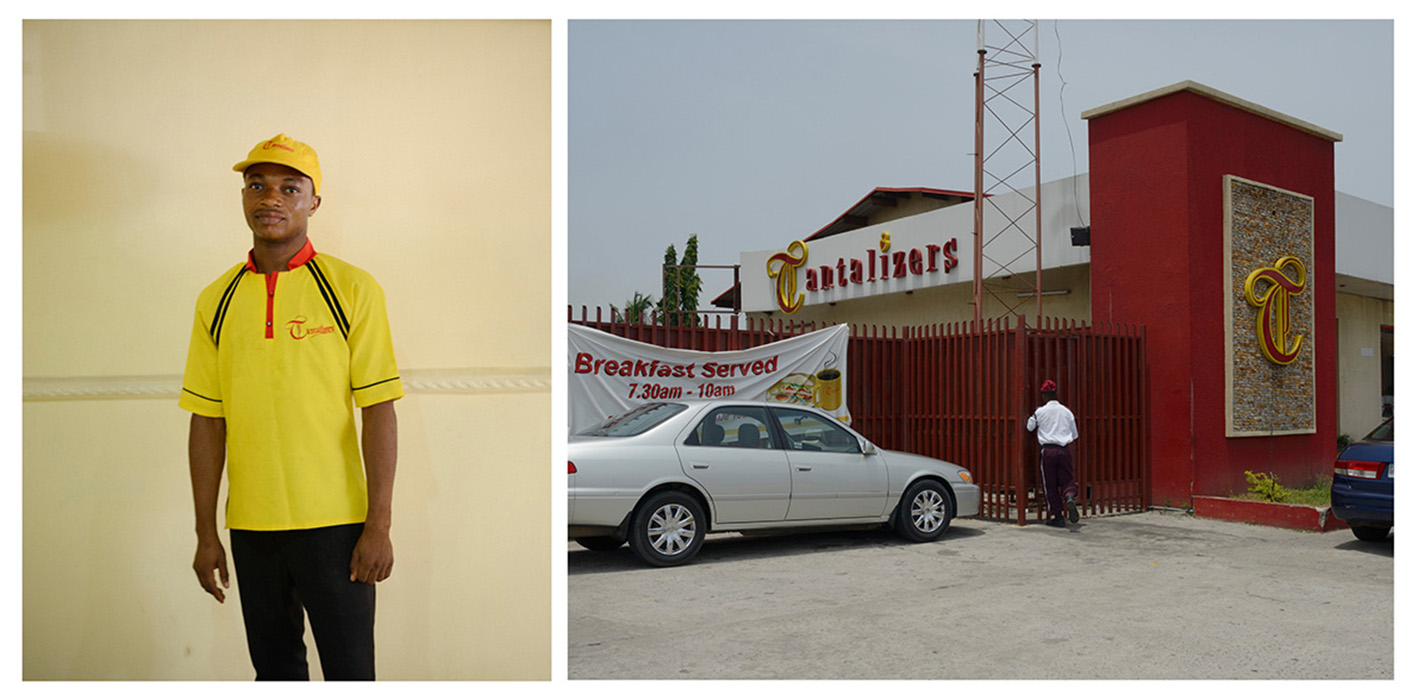
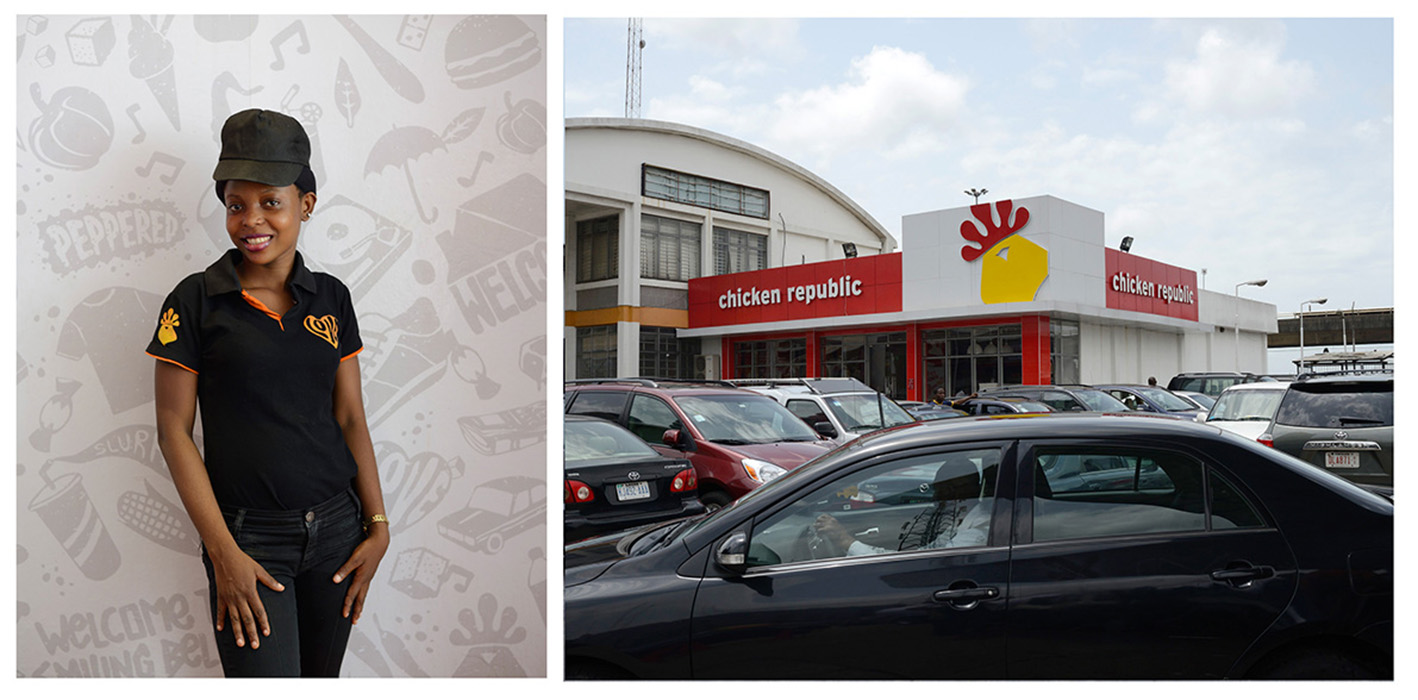
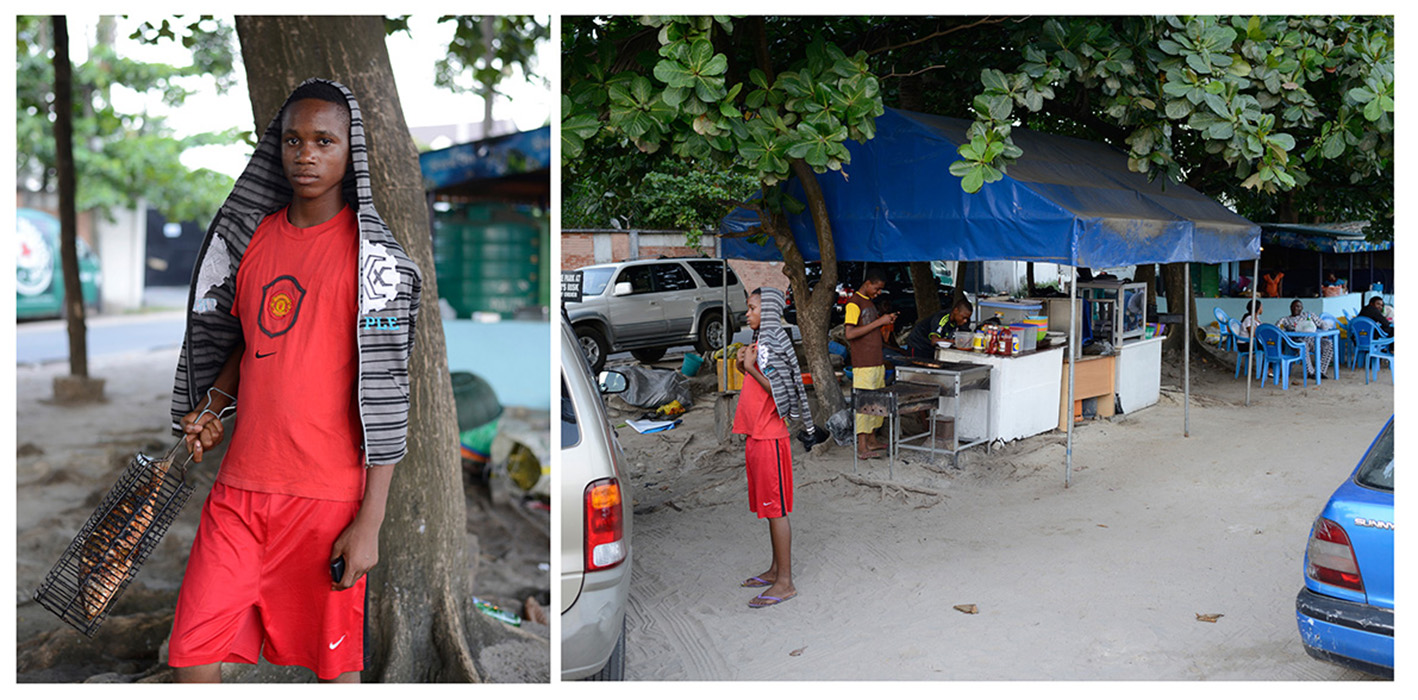
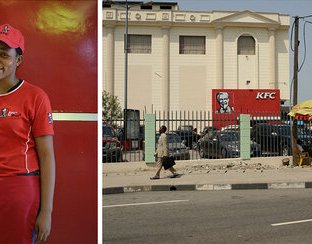
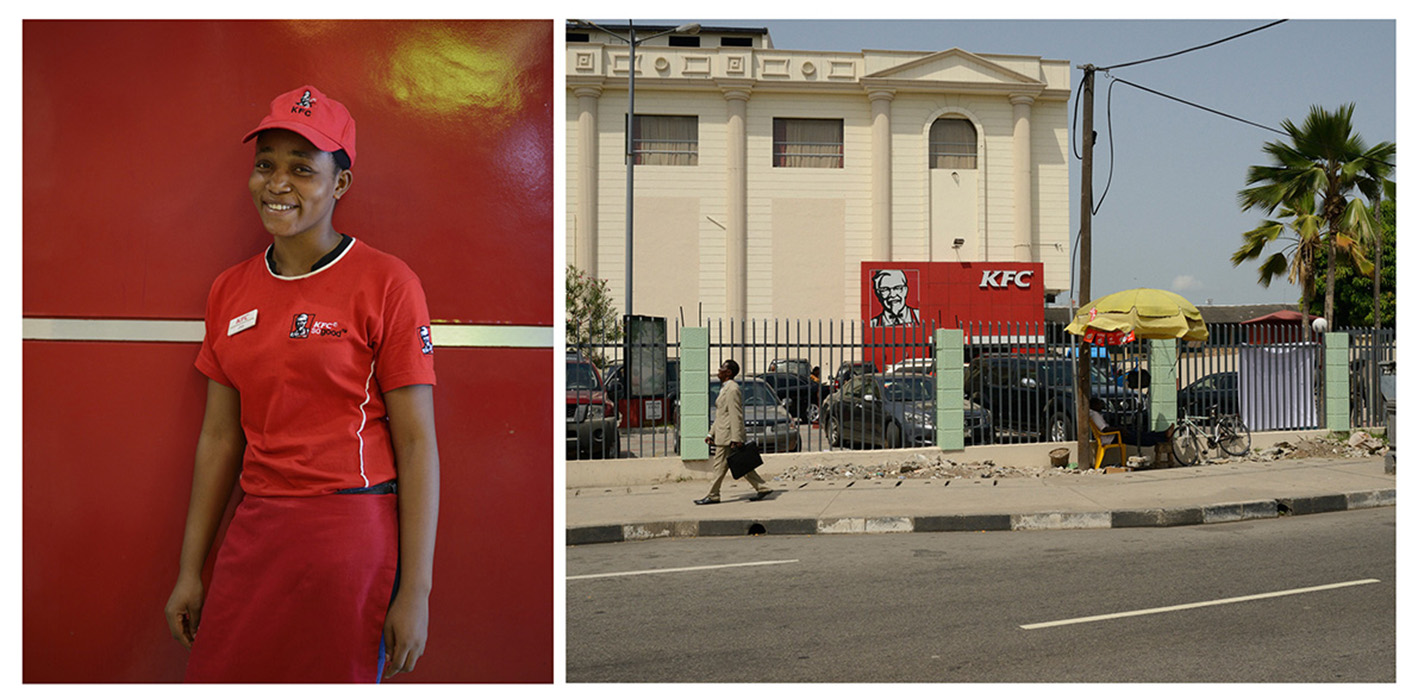
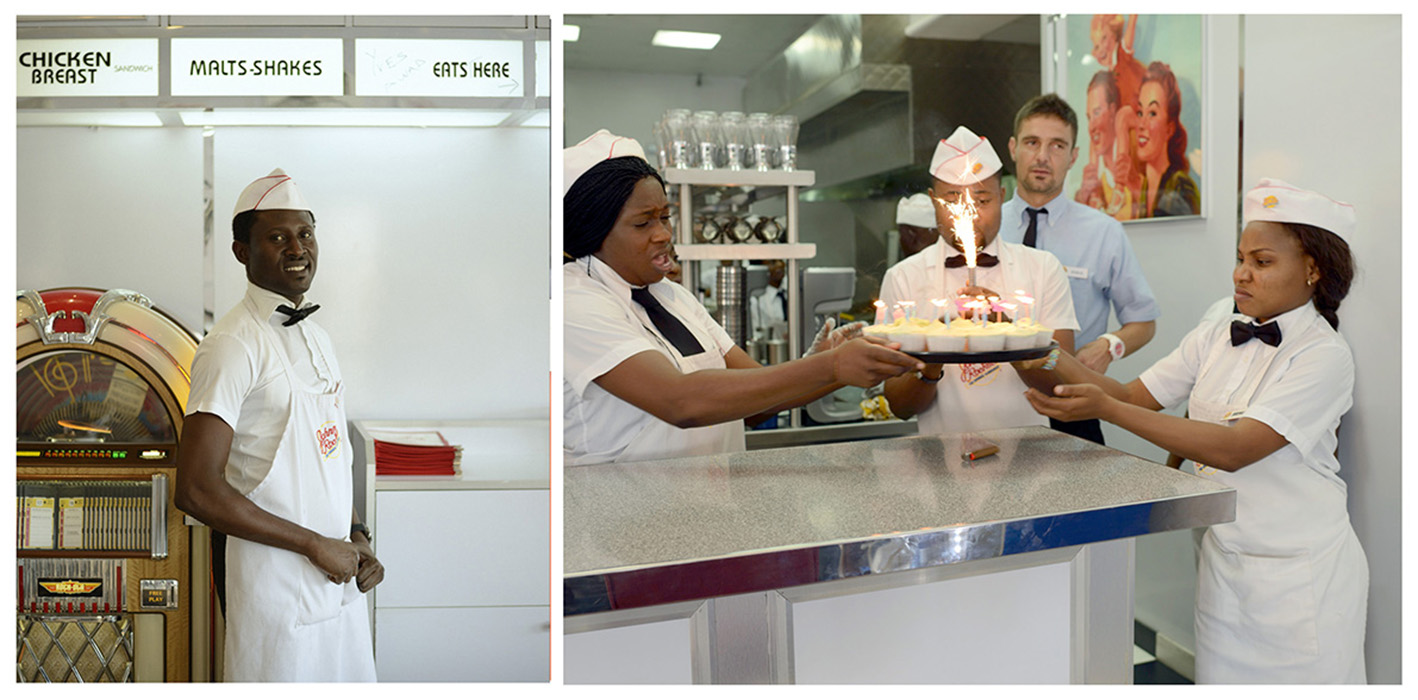
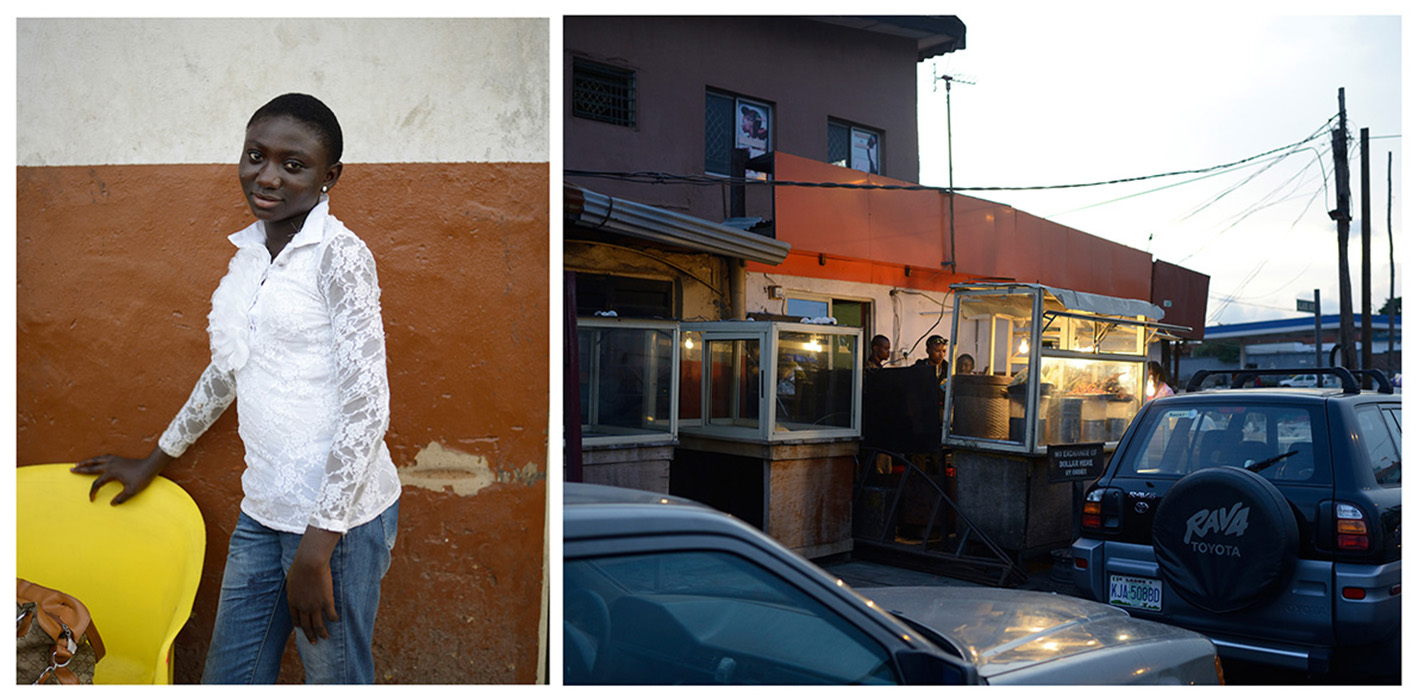
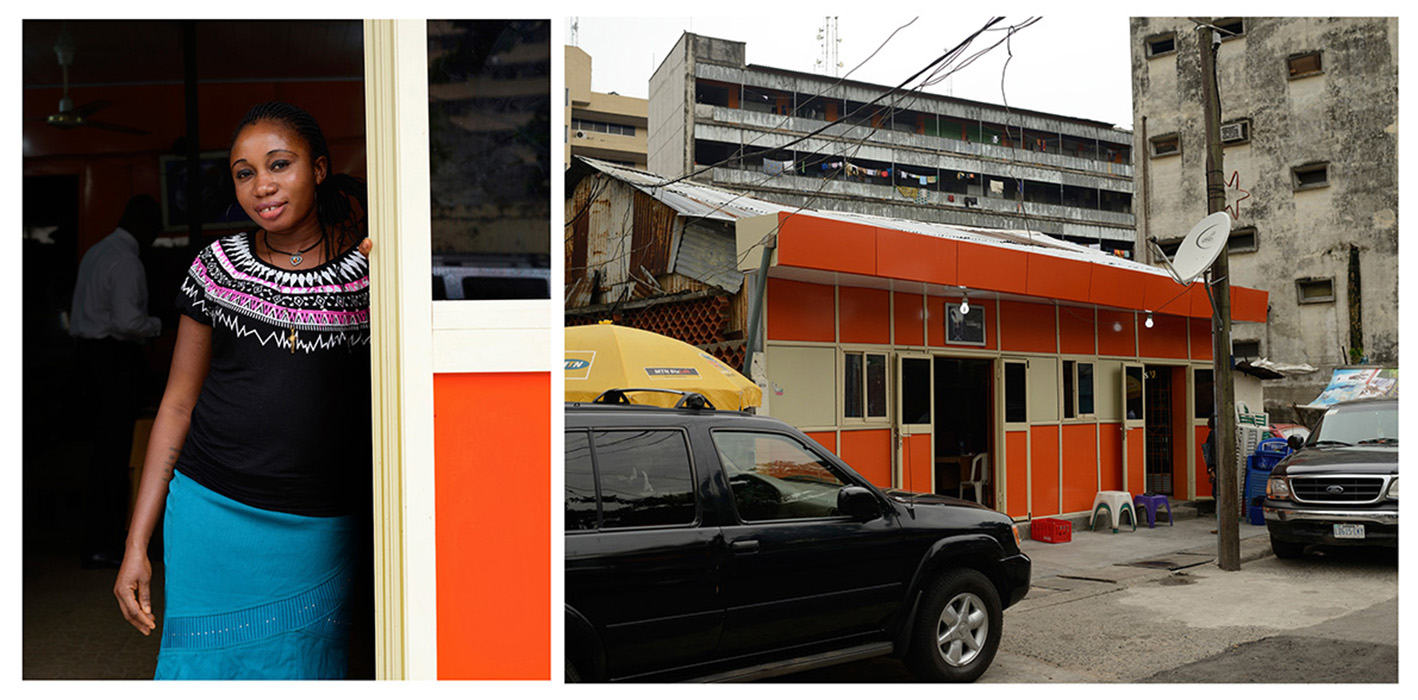
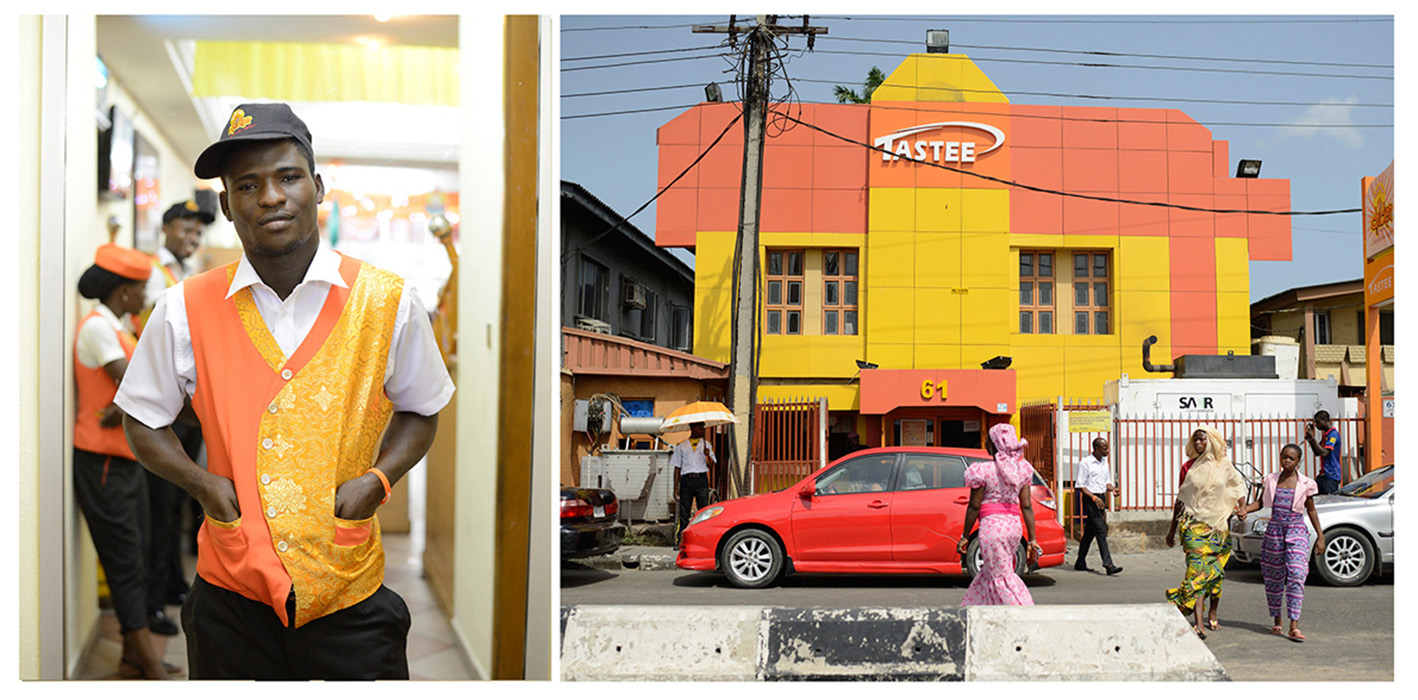
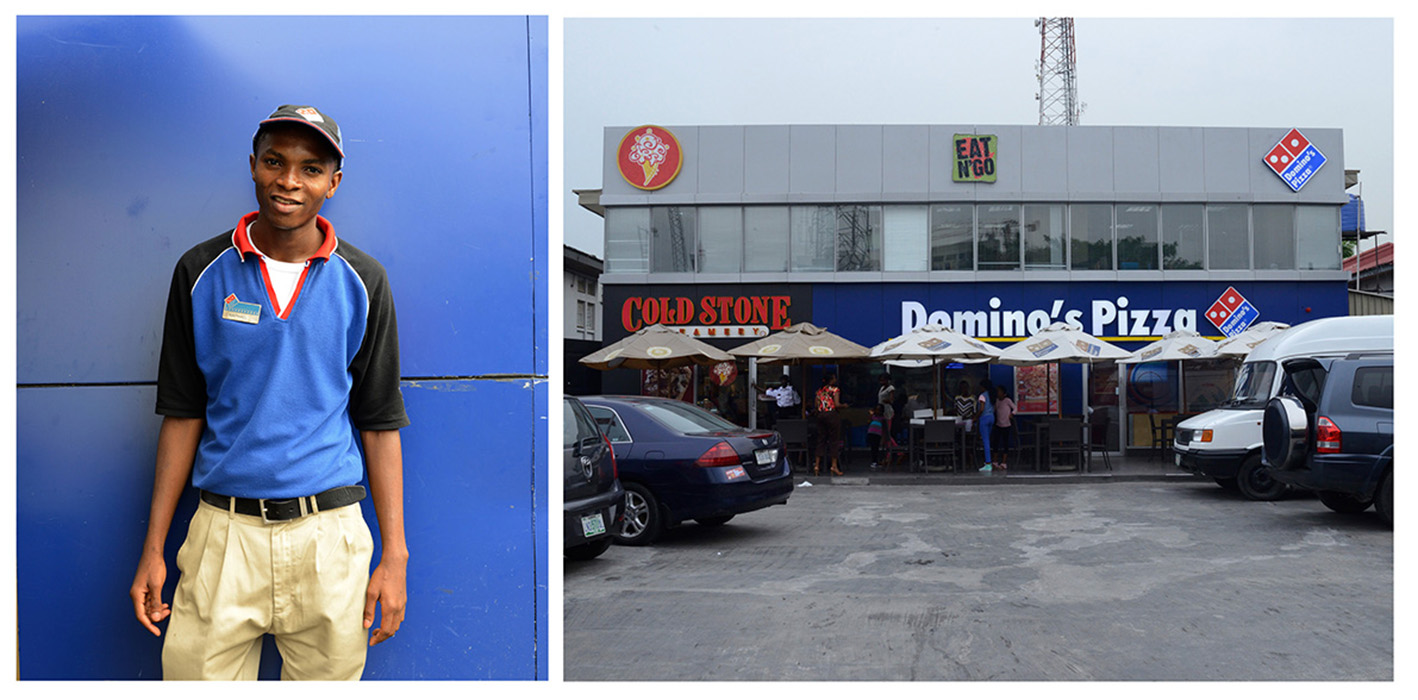
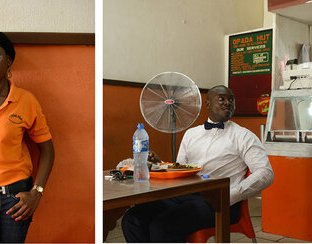
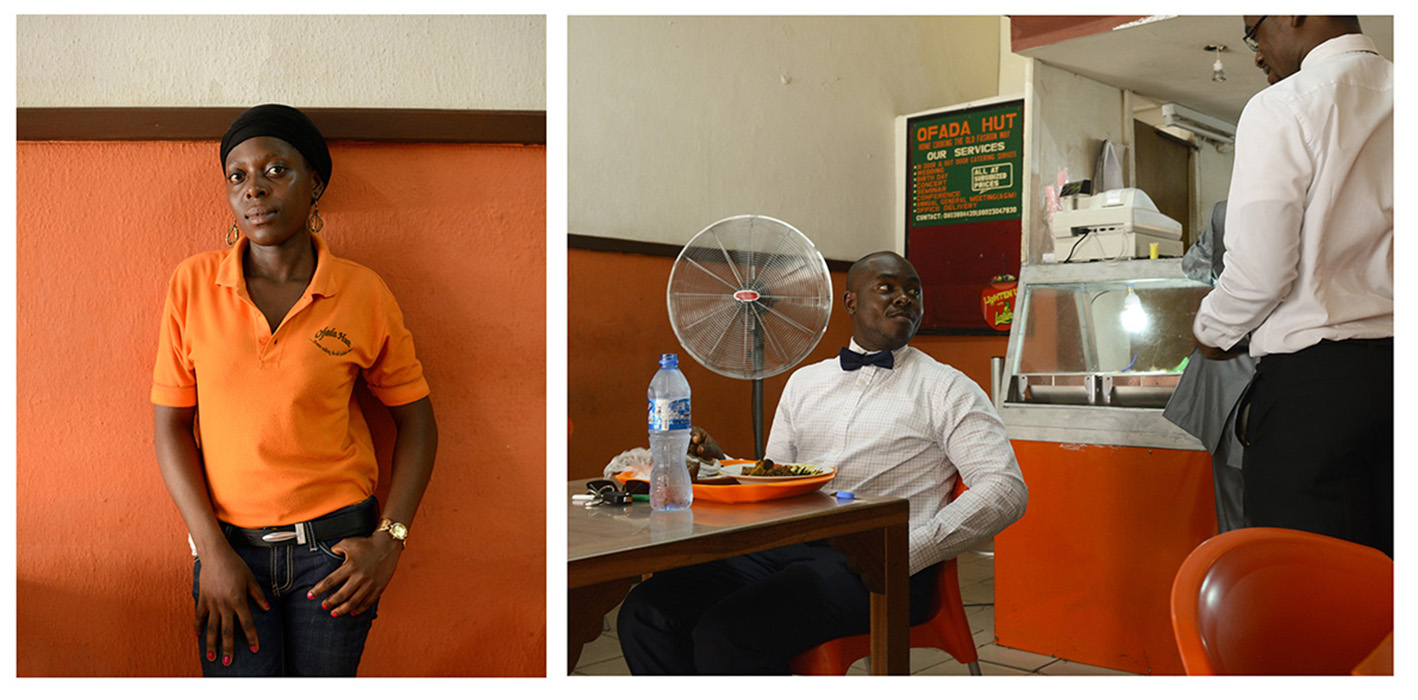
« “Fast Food NAIJA” is a photography project which aims to underline the syncretism operating in the Bukkas, traditional fast food restaurants, and a more formal industry that is booming, represented by local and international brands. These locations provided me with an extremely rich visual playground. Along with a traditional documentary approach, there is a color patchwork made of portraits and landscapes, determined by the colour code of each brand. These are all elements of a theatre play, offering up an incredible slice of Nigerian life. »
Benedicte Kurzen
Journalist accounts
Alongside the analytical and visual creation work, a journalist wrote two articles about the key – and most representative – moments of middle class daily life relating to dietary habits. This was highlighted by the work of the expert and the visual artist.
They are published and available here :
Tunde Ogunrinde : Mr Fast Food

Suya, the basis of good grilled meat